
Community
Mutual Aid Is Just Community With the Paperwork Removed
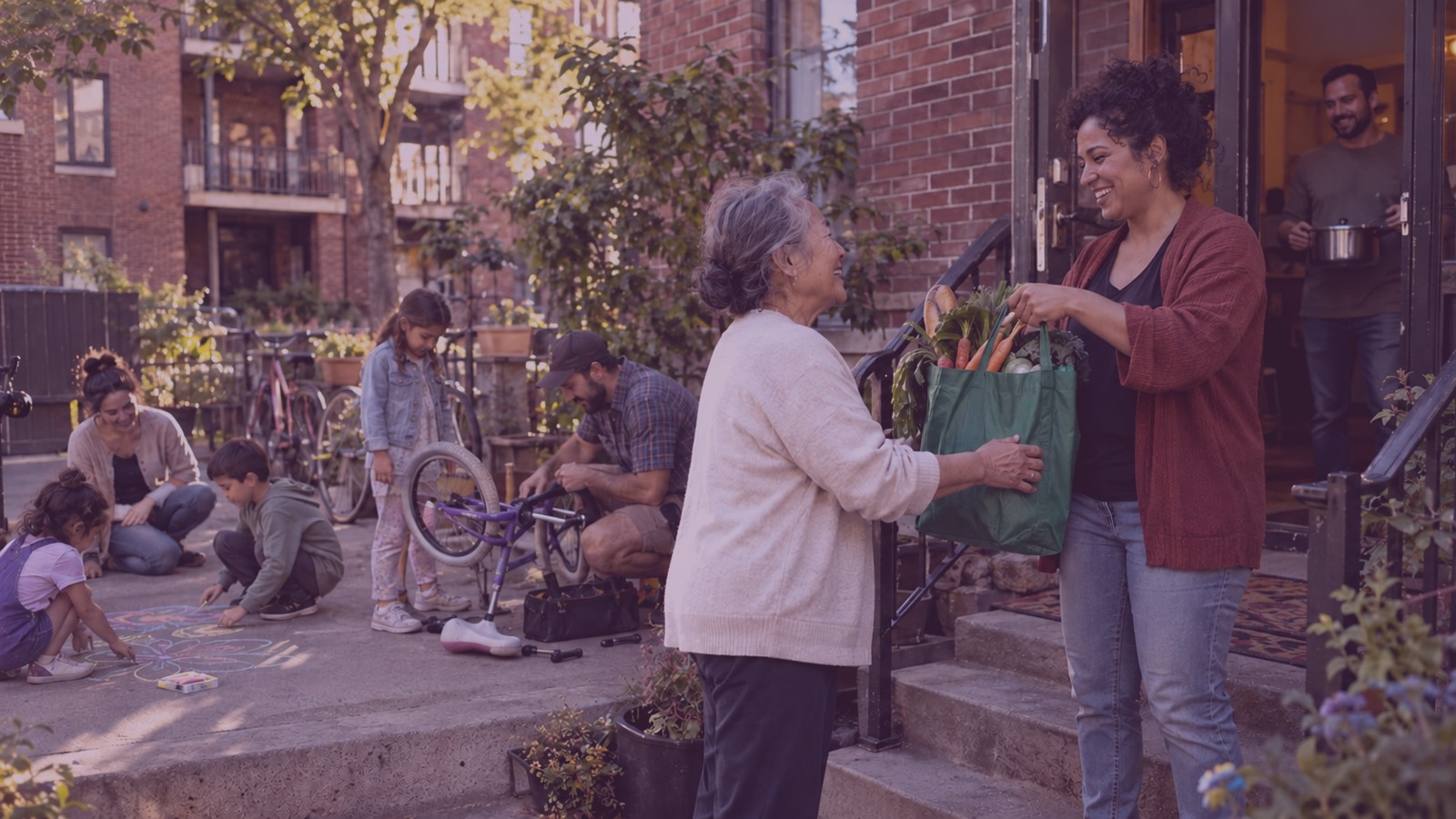
Long before community care had an application form, people looked after one another. A neighbour brought soup when someone was sick, watched a child during an emergency, shared a ride into town or lent a tool that would otherwise be used once and stored for years. Nobody needed to establish a program before responding. They noticed a need, considered what they could offer and helped.
I experienced this kind of care during the year I worked on a farm in Southwestern Ontario alongside two lifelong farmers. I was also living on their property at the time, and over the winter, I became so sick that I was completely bedridden. I didn't know anyone else in the area, and I wasn't in a position to get groceries or manage much of anything beyond being sick.
Before I had to figure it out alone, the farmers offered to help. They got my groceries, delivered them personally to my door and brought me fresh eggs from my favourite farm nearby. I also didn't have to worry about making up the work time I'd missed while I recovered. There was no complicated conversation about what I needed to prove or how quickly I could become useful again. They saw that I was unwell and stepped in.
I've never forgotten it. The groceries and eggs were practical, but the deeper gift was knowing someone nearby had noticed and cared. During a vulnerable moment in a place where I had no other support system, I wasn't left to manage everything alone.
The Kind of Help You Don't Forget
That experience showed me why ordinary acts of community care matter so much. When someone is sick, grieving, overwhelmed or facing an emergency, even a basic task can become impossible. The help that makes the greatest difference may not be dramatic. It might be a bag of groceries, a ride, a prepared meal, a few hours of childcare or permission to recover without being penalised for it.
What made the farmers' support meaningful was that they offered before I had to build a case for why I deserved it. They didn't turn my illness into another administrative task. They recognised a need they could meet and responded in a way that preserved my dignity.
That spirit sits at the heart of mutual aid. The phrase can sound political or formal, but the practice itself is deeply ordinary. It's people sharing resources, time, knowledge and care directly with one another because they recognise that everyone can need support and everyone has something they can contribute.
At a time when many people are financially stretched, socially isolated and uncertain about what comes next, rebuilding this instinct could make our communities more resilient. We may not be able to solve every large problem ourselves, but we can change what it feels like to move through one alone.
Help Before It Had a Department
Many of us have become accustomed to thinking that help must come through an institution. If someone needs food, transportation, employment support, childcare or companionship, we look for the department, service or organisation responsible for that category.
Those services can be essential. Trained professionals, public programs and established organisations bring knowledge, infrastructure and accountability that a group of neighbours may not have. Mutual aid isn't meant to replace them.
But people's lives don't arrive in neat categories. Someone may have enough food but no way to reach a medical appointment. A parent may be able to work but need two hours of childcare between shifts. A newcomer might have valuable skills but few local connections, while a nearby business is looking for help. An older person may be managing well at home but need someone to carry in groceries or explain a new piece of technology.
Formal programs can't always respond to every small or immediate gap. This is where community can move differently. People can address what's directly in front of them without waiting for a complete service to be designed around it.
Sometimes the most useful support begins with a simple offer: I'm already going that way. Do you need a ride? I made too much food. Would you like some? I know how to do that. Do you want help?
What Mutual Aid Actually Means
Mutual aid is voluntary support shared among people who understand that their wellbeing is connected. It can be organised through a neighbourhood network or community group, or it can happen informally among a few households.
What makes it mutual isn't that every exchange is equal or immediately repaid. It's that people aren't permanently divided into helpers and helped. Roles change because life changes. The person offering support today may need it next month, and the person receiving help may contribute in a completely different way later.
One neighbour may share garden produce in August and need help shovelling snow in February. Someone without extra money might offer translation, pet care, sewing skills, technology support or knowledge about navigating a local service. Another person may not have the capacity to volunteer regularly but can introduce two people who should know one another.
This broader understanding of contribution matters because a healthy community isn't built only through financial transactions. It's also built through trust, usefulness, memory and the steady experience of knowing we don't have to face everything alone.
Where Formal Systems Leave Gaps
Institutions need eligibility criteria, documentation and processes because they serve many people and manage limited resources. The trouble begins when the process becomes so rigid that the person disappears inside it.
Someone may be just above an income threshold, unable to gather the required paperwork, living outside a service area or facing a problem too urgent to wait through a lengthy intake. A person can be struggling significantly and still hear that they don't qualify.
This is one expression of the fragmentation I explored in When No One Holds the Whole Picture: The Human Cost of Siloed Systems. A food program sees food, an employment office sees work and a health-care provider sees symptoms, while the person is living all of those realities at once. Each service may be completing its assigned task, yet no one is addressing how the pieces affect one another.
Mutual aid can hold some of the space between those services. A neighbour might offer transportation while someone waits for formal support. A community member could help gather documents for an application. A local connection might lead to a short project or employment opportunity. These actions may not resolve the structural problem, but they can prevent an immediate gap from becoming a crisis.
From Charity to Reciprocity
Charity often moves in one direction, from a person or organisation with resources to someone identified as being in need. It can provide essential relief, especially during an emergency. But when it isn't handled thoughtfully, it can create distance between the giver and the receiver.
Mutual aid begins from a different premise. Vulnerability is part of being human, circumstances can change quickly and our futures are connected. Helping another person strengthens the community we may one day need ourselves.
Reciprocity doesn't mean keeping score. A neighbour who receives groceries today doesn't owe the exact value back next week. It means allowing people to retain dignity and agency, asking what would actually help and recognising forms of contribution that markets often overlook.
It also means resisting the idea that people receiving support should be grateful for whatever they're given. Someone experiencing hardship still deserves choice, safety and respect. The fact that something is free doesn't automatically make it useful or appropriate.
The question shifts from "What can I do for those people?" to "What can we make possible together?" That small change in language can create a very different relationship.
What It Can Look Like Close to Home
Mutual aid can begin with small, practical exchanges. Neighbours might coordinate school pickups, prepare meals after a birth or loss, share freezer space, trade homegrown food, create an emergency phone tree or pool money for a household facing an immediate expense.
Skills belong in the exchange too. Someone might repair a bicycle, help write a resumé, teach basic sewing, explain a government form or set up an older neighbour's phone. The ideas in The Quiet Economy Already Living Next Door are part of the same larger shift. When we circulate what we already have, including knowledge and time, we reduce costs while strengthening the relationships that make future cooperation easier.
A community bulletin board can hold requests and offers, while a library, faith group, café, hardware store, grocery store or neighbourhood association can provide a familiar meeting point. Someone might post that they have extra garden produce. Another person could offer rides into town on a particular day. A retired tradesperson might help with a minor repair, while a student offers technology support.
One exchange may seem small, but it also creates trust. Over time, people begin to know who has tools, who understands technology, who can offer a ride and who can be called when something unexpected happens. That knowledge becomes a form of community infrastructure, even if it never appears on an official map.
Digital Tools Can Support Local Care
In communities where people don't naturally cross paths every day, technology can help these connections form. Local Facebook groups, neighbourhood chats, shared spreadsheets and simple online forms can give residents a place to post needs, offer resources and coordinate responses.
These tools can be especially useful in rural areas, where homes are spread out and travelling into town may take time. Someone already making the trip can offer to pick something up. A parent can ask about local childcare. A small business can share a short-term job, while a resident lets neighbours know about a skill they can offer.
Digital spaces need thoughtful moderation. Clear guidelines can protect privacy, discourage judgement and reduce scams. People shouldn't be asked to post financial, medical or identifying information publicly, and requests involving money, transportation or access to someone's home require additional care.
Not everyone uses Facebook or feels comfortable online either. Physical bulletin boards, phone trees and face-to-face gathering places still matter. Technology can make care easier to organise, but it shouldn't become another barrier people have to cross before they can participate.
When a Recurring Need Becomes a Role
Mutual aid can show us when a community needs more than an informal exchange. If the same request keeps appearing, it may point towards a service or role that doesn't yet exist.
If residents repeatedly need rides to appointments and stores, the community may need a transportation coordinator or accessible shuttle. If older adults consistently require help with technology and paperwork, there may be room for a community navigator. If newcomers have skills but struggle to make local connections, a bridge between residents, employers and services may be missing.
Some responses can remain informal, but not all of them should. Scheduling, safety checks, communication, administration and partnership development take time. If a community begins depending on someone to perform those functions, the work should be recognised and, where possible, funded.
The goal isn't to turn every act of neighbourly care into a business. It's to notice when a recurring need has grown beyond what volunteers can reasonably carry. Sometimes mutual aid doesn't only help someone through a gap. It helps us see the work required to close it.
Keep It Human and Sustainable
Community care can become exhausting when the same few people always organise, donate, drive and respond. The most generous person in the group can quickly become the person everyone relies on, often without anyone noticing what that role is costing them.
A mutual-aid network needs boundaries. Coordination can rotate, requests can be specific and people can choose what they're able to offer. Saying no should be accepted without guilt or explanation.
Clear expectations protect everyone. If someone offers rides only on Tuesdays, that boundary should be respected. If a person can contribute food but can't deliver it, someone else may be able to help with transportation. When tasks are visible and shared, care becomes something a group can sustain instead of an invisible workload carried by one or two people.
It's also important to recognise when a situation requires professional or emergency support. Neighbours can bring meals, make calls, offer transportation and remain present, but they aren't substitutes for trained medical, legal, mental-health or crisis professionals.
Mutual aid works best as part of a wider ecosystem. It adds relationship, flexibility and local knowledge while formal services provide the specialised support and infrastructure communities should still be able to depend on.
Closing Thoughts
Mutual aid isn't a new innovation. It's an old human practice we're remembering because the limits of isolation and overly formalised systems have become increasingly difficult to ignore.
We don't need abundant money, endless free time or a perfect plan to become more useful to one another. We can begin with one honest question: what do people near me need, and what could we share?
The answer may be a ride, a meal, a tool, a connection or ten minutes of knowledge. Small exchanges won't solve every structural problem, but they can keep someone from slipping through a gap. They can also show us which needs keep repeating, which resources are already present and where a more permanent service or paid role may be needed.
Community isn't only the place where we live. It's the relationships we build, the resources we circulate and the decision to remain available to one another without requiring people to prove they deserve care first.
Thanks for reading!
Miranda