
Wellbeing
Build Your Ark: Creating Safety and Possibility in Unsettling Times
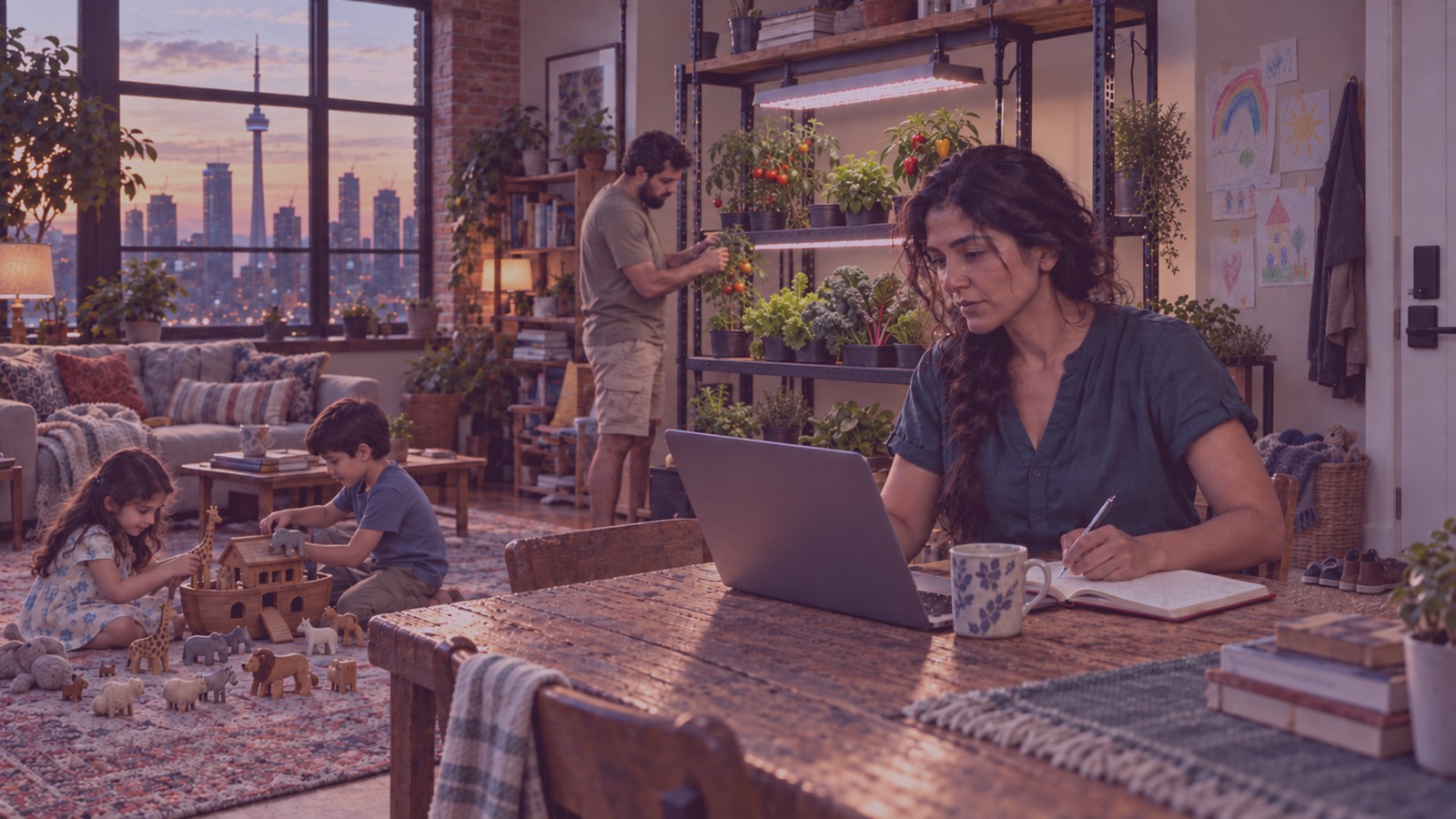
There are times when peace feels less like something we can find and more like something the world has misplaced. We look around and see war, political division, rising costs, climate disruption, job instability, rapid technological change, and systems that no longer seem able to hold the people moving through them. Even when our own lives are relatively quiet for a moment, the wider atmosphere can still feel heavy.
So how do we find peace when peace feels elusive?
Our bodies notice that instability. Stress can make it harder to rest, concentrate, make decisions, or imagine a future beyond the next immediate problem. The World Health Organization notes that stress affects both mind and body and often becomes widespread during economic crises, disease outbreaks, natural disasters, war, and community violence. Feeling unsettled during an unsettled time doesn't mean you're failing to cope with life. It means you're paying attention to it.
I'm writing this from inside my own season of uncertainty. After losing my job and struggling to find steady work, I've watched plans I thought I could rely on change beneath me. I've had to learn that peace can't always depend on knowing what happens next. Sometimes it has to come from knowing what I'm choosing to build while the larger picture is still forming.
The question, then, isn't how to become untouched by the world. It's how to remain connected to yourself while living through a period of change you can't fully control. How do you protect enough energy to think, heal, and create? How do you keep moving without pretending you know exactly where everything is going?
This Is a Heavy Time to Be Human
Change is often described as exciting, but it can also be deeply disorienting. A changing job market doesn't feel like innovation when you're worried about rent. A new technology doesn't automatically feel promising when it threatens the work you've spent years learning to do. A major life transition can contain possibility and grief at the same time. Even changes we choose can unsettle us because every new beginning requires us to release something familiar.
The nervous system tends to prefer enough predictability to know where safety, connection, and resources are coming from. When the conditions around us keep shifting, the mind may search constantly for information that will finally make everything feel certain. We refresh the news, run the same scenarios, try to plan five years ahead, and wonder why we still can't relax. (Trust me, I've tried!) But no amount of thinking can produce certainty where certainty doesn't exist.
This doesn't mean the threats aren't real or that a calmer mindset will solve material hardship. People need income, housing, care, community, and practical support. Inner work isn't a substitute for those things. But when so much lies beyond our control, learning where to place our attention can help us preserve the clarity and energy needed to respond to what is actually ours to do.
Peace Doesn't Require Certainty
We often imagine peace as the moment when every problem has been resolved. The bills are paid, the job is secure, the relationship is clear, the world is stable, and the future finally makes sense. If those are the conditions, peace will always remain somewhere ahead of us.
Peace can be smaller and more immediate than that. It can be the experience of returning to the part of life you can touch. It may be making a meal, walking the dog, completing one application, learning one skill, or having one honest conversation. It isn't denial, passivity, or permanent calm. It's a way of coming back into relationship with the present so fear doesn't make every decision for you.
Sometimes peace looks like rest. Sometimes it looks like action. The important question is whether the action brings you into deeper contact with your life or keeps you circling the same fear. There's a difference between preparing for change and repeatedly rehearsing disaster. One builds capacity. The other consumes it.
You Weren't Meant to Hold the Whole World at Once
We now have access to more information about suffering, danger, and uncertainty than a human being could ever meaningfully act on. A nervous system that evolved to respond to what was happening nearby can now be asked to process crises from every part of the planet before breakfast. Caring about the world is human, but carrying the whole world in your body every hour of the day isn't sustainable.
Limiting your exposure doesn't mean becoming indifferent. It means recognising that attention is finite. The WHO includes limiting news consumption among its suggestions when following news and social media increases stress. You can remain informed without repeatedly flooding yourself with information that leaves you less able to care for your own life or contribute to anything beyond it.
You're allowed to ask: Is there something useful I can do with this information? If the answer is yes, choose an action within your reach. If the answer is no, it may be time to put the world down for a while. Rest isn't abandonment. It's part of remaining capable of showing up again.
Build Your Ark
When the wider world feels stormy, it may help to think about building your ark. Not as an escape from reality or a fortress that separates you from everyone else, but as something steady enough to carry you through a period whose final shape you can't yet see.
Your ark might be a new job that offers greater stability, a career change that gives you more options, or a business built around a need you can clearly see. It might be returning to school, learning a trade, moving to a place where your life is more sustainable, creating a stronger local community, or beginning a completely different journey. It may not look ambitious from the outside. It only needs to create more safety, meaning, or possibility in your actual life.
My own ark isn't one single thing. Right now, it looks like exploring a more technical education, building a body of writing and work around human-centred careers, learning how AI and digital systems are changing the workplace, and considering where I want to live next. It also means thinking about the kind of home and community that could support me, my animals, my relationships, and the quieter life I'm trying to create.
Part of that vision is being closer to the people I love and living somewhere with greater access to nature and water. Those things may not sound like career goals, but they shape the kind of work and life I can sustain. I don't know exactly how all these pieces will come together yet, but each one is helping me build more options than I had before.
Building an ark doesn't require you to know exactly where it will land. You begin with what you have, what you know, and what you can do next. One application becomes a conversation. One course introduces a skill. One small offer reveals what people need. One hour spent exploring an idea creates a possibility that didn't exist yesterday. You aren't predicting the entire future. You're building something that can move within it.
An ark can also be internal. It can be a daily rhythm, a creative practice, a spiritual life, stronger boundaries, better care for your body, or relationships where you don't have to disappear to belong. External change is easier to navigate when there is somewhere inside your life that still feels like home.
Your Attention Is a Building Material
Attention is one of the few resources we still have some influence over, which makes it precious. Whatever receives our repeated attention tends to grow in our internal world. This doesn't mean we can think our way out of structural problems or manifest safety through optimism. It means that our focus helps determine which capacities, ideas, and possibilities we continue feeding while we deal with reality.
If all of your attention goes towards what's collapsing, you may have very little left for what you could build. The mind can become so occupied with monitoring danger that it stops noticing openings. Redirecting some attention towards learning, making, practising, or connecting can interrupt that cycle. It gives the nervous system an experience of movement and gives your future something concrete to grow from.
Since losing my job, I've had plenty of days when fear could've taken every bit of attention I had. Some days it did. But I've also tried to give part of that attention to writing, rebuilding my website, researching education, learning new tools, and shaping ideas that may eventually become work. I can't tell you exactly where every one of those efforts will lead, but they've helped me feel less like I'm waiting for life to resume and more like I'm participating in what comes next.
The project doesn't need to be impressive. You might update one section of your resumé, research a field, practise a skill, make something with your hands, begin a garden, reconnect with someone, save a small amount, sketch a service, or create a corner of your home that feels peaceful. The action matters partly because of what it produces and partly because it reminds you that you can still participate in shaping your life.
Focus isn't only about productivity. Sometimes the most useful place to direct your attention is towards sleep, food, movement, play, grief, or the people who make you feel more like yourself. Healing and creating aren't opposites. The life you're building needs a person inside it who has enough room to breathe.
You Don't Need to See the Final Outcome
One of the hardest parts of beginning again is acting before you have proof that the effort will work. We want the complete plan, the guaranteed return, and the clear destination before we invest our energy. But many meaningful paths only become visible through movement. You learn what fits by trying, what matters by paying attention, and what the next step is by taking the one available now.
This is especially true when the world is changing quickly. The job you're preparing for may evolve. The business may become something different from the first idea. A course may lead you towards work you didn't know existed. A move made for practical reasons may open a new community and way of living. Not seeing the final outcome doesn't mean there isn't one. It means you're still close to the beginning.
I'm living in that early space now. I can see several pieces taking shape, but I can't yet point to the finished picture. There are days when that feels freeing and days when it feels deeply uncomfortable. Still, every useful step gives me more information about what fits, what doesn't, and what I want the next chapter to make possible.
You don't have to force every interest into a five-year plan. You can let some steps be exploratory. The WHO's guide, Doing What Matters in Times of Stress, is built around practical skills people can use in small amounts of time. That principle matters here too. Small, repeated actions can help you remain connected to what matters while the larger picture is still forming.
Build a Life With Room to Be Alive
The purpose of building your ark isn't simply to become more employable or productive during difficult times. It's to create a life that can hold more of you. A new job matters if it helps you feel safer. A business matters if it gives you more agency. A different way of living matters if it creates space to heal, play, explore, and be present for the people and experiences you love.
For me, room to be alive looks fairly ordinary. It means time outside with my dogs, a home where all my animals are safe, work that uses my creativity without consuming every part of me, enough quiet to hear my own thoughts, and relationships where I don't have to shrink to belong. It means being close enough to the people and places that help me feel grounded. Those things may not look like conventional career goals, but they're part of the life any career, education, or business needs to support.
We can become so focused on surviving change that we accidentally rebuild the same conditions that depleted us. We choose the next role only for security, fill every free moment with improvement, and treat rest as something we can earn once the future is settled. But if your new path has no room for being human, it may protect you from one form of instability while creating another.
Let your definition of safety be wide enough to include joy. Let it include enough time, meaningful relationships, curiosity, physical and emotional space, and moments when nothing needs to be optimised. Play and exploration aren't distractions from rebuilding. They help you remember what the rebuilding is for.
Closing Thoughts
Peace may remain elusive if we expect it to arrive only after the world becomes predictable. These are heavy times, and it makes sense that our minds and bodies are responding to that weight. We don't need to shame ourselves for feeling it, and we don't need to pretend that every crisis can be solved through personal focus.
But we can choose what we continue building while uncertainty is here. We can direct some of our attention towards the job, skill, business, relationship, home, community, or inner practice that might carry us forward. We can create small experiences of safety while working towards larger ones. We can give ourselves somewhere to place our hope that also asks something practical of our hands.
You don't need to see the final shore before you begin. Build what helps you stay steady. Build what gives your energy somewhere life-giving to go. Build something with room for rest, healing, play, and discovery. The world may still be changing around you, but you will no longer be standing still waiting for certainty to return.
Thanks for reading!
Miranda