
Systems
AI Is Changing the Work Inside the Job
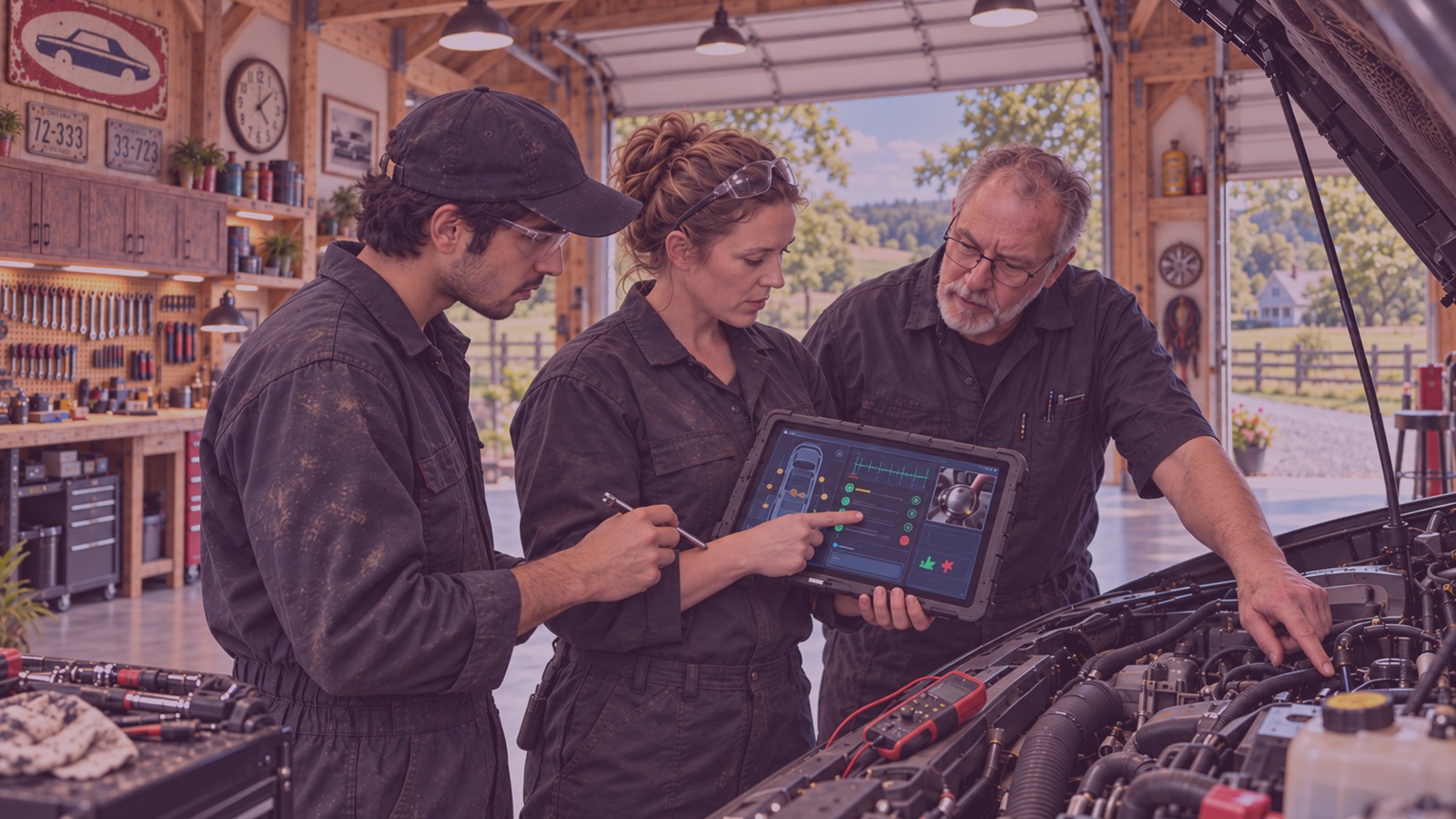
The conversation about AI at work is often reduced to one frightening question: will it replace me? It's an understandable concern. People have already watched technology change industries, reduce teams and move work into systems they didn't choose. When income and identity are involved, reassurance without honesty isn't very useful.
I understand why the replacement question creates fear. When you've already experienced job instability, headlines about automation don't feel theoretical. They land in the same part of the body that worries about income, housing and whether the skills you've spent years developing will continue to matter. I don't think people need empty reassurance. They need honest ways to understand what's changing, how to prepare and where their human experience still carries value.
Replacement also isn't the only way work changes. A role can keep the same title while the daily tasks, expected speed and skills surrounding it shift dramatically. Someone may not lose their job directly to AI, but they may be expected to use unfamiliar tools, verify more information or produce considerably more in the same amount of time. The work changes even when the organisational chart doesn't.
AI will affect occupations unevenly, and no one can responsibly promise that every job is safe. What we can do is look beyond the most dramatic predictions and prepare for a more immediate reality: many of us will work alongside AI, review what it produces and help decide where it should and shouldn't be used.
The Replacement Question Is Too Simple
Jobs are collections of tasks, relationships, decisions and responsibilities. AI may perform one part quickly while remaining unreliable or inappropriate for another. A tool can draft a routine message, but it doesn't carry accountability for the consequences. It can summarise a file, but it may not understand the history, relationships or power dynamics surrounding the decision. It can suggest an answer without recognising why a particular person or situation doesn't fit the usual pattern.
The replacement question can also hide choices made by organisations. Technology doesn't decide on its own that a team should be reduced, a workload should be doubled or every employee should be monitored more closely. Leaders decide how saved time, money and risk are distributed. The same tool can reduce repetitive work in one workplace and become a way to intensify or surveil employees in another.
That distinction matters because workers often carry the consequences of decisions they weren't involved in making. They may receive an AI tool without enough training, be held responsible for errors in its output and then be expected to meet higher targets because part of the process is supposedly faster. When concerns are raised, they can be framed as resistance to change rather than knowledge about how the work actually functions.
The people doing the job often know where mistakes are costly, which exceptions matter and what customers or communities genuinely need. AI strategy created without that knowledge may automate what's easiest to count while damaging the less visible work that allows the service to function.
Technology Changes the Work Around the Job
Earlier in my career, I worked with large digital systems in corporate retail, where one technological or process change could affect work across departments, store locations and levels of the organisation. That experience taught me that implementation is never only about the tool. A system that looks orderly in a project plan still has to meet real employees, existing workflows, incomplete information and situations the original design didn't anticipate.
The technology may change the process, but people are still the ones interpreting what happens, catching inconsistencies, communicating across functions and handling the consequences when the system doesn't reflect reality. That's why I'm cautious whenever a new tool is presented as though implementation alone will automatically make work easier.
A new system may save time in one department while creating corrections, delays or additional responsibilities somewhere else. If data entry becomes faster but employees spend more time fixing errors, the organisation hasn't necessarily saved as much as it thinks. If customer responses are generated quickly but frontline workers have to calm people who feel dismissed by them, the emotional labour hasn't disappeared. It's moved.
AI is different from the systems I encountered earlier in my career, but the lesson still applies. We need to follow the work through the entire process before deciding what a technology has truly changed. The tool is only one part of the shift. The expectations, policies, training and decisions surrounding it determine whether it becomes meaningful support or another source of pressure.
Tasks Change Before Whole Jobs Disappear
Many people will experience AI first as a change in their tasks. Drafting, sorting, transcription, scheduling, research and basic analysis may take less time. That can create useful room for more meaningful work, but only if organisations allow that room to exist.
A faster first draft can easily become an expectation that one employee should now produce five times as much. Saved time may be filled immediately with additional tasks, messages and performance targets. AI-generated material still needs instructions, review, correction and judgement, which can be mentally demanding in a different way. Faster production also creates more material for someone else to assess.
This is where looking beneath your job title becomes useful. What do you actually do during an average week? Which activities are repetitive and relatively low risk? Which ones depend on trust, physical presence, creativity, context or accountability? Where do people already come to you because the formal process doesn't account for the situation they're facing?
Mapping your role at the task level can help you see where AI may genuinely support you and where your human contribution needs to become more visible. It may also reveal that some of your most valuable work isn't the task itself, but the judgement surrounding it.
Human Judgement Becomes More Important
AI can produce a confident answer without understanding whether it's true, fair or appropriate. Someone still needs to evaluate the source, notice what's missing and consider who could be affected by an error. As output becomes easier to generate, discernment becomes more valuable.
Context is part of that judgement. A recommendation designed for a large urban company may fail in a rural community with different infrastructure. A standard response may be technically correct while making a frightened customer feel dismissed. A seemingly efficient process may be inaccessible to someone who doesn't have reliable internet, uses assistive technology or needs to explain a situation the form wasn't designed to capture. Human work often lives in those exceptions.
This doesn't mean humans are always unbiased or correct. We aren't. It means accountability can't simply be handed to a tool. People still need to question the information, recognise their own blind spots and decide when a situation requires greater care or specialised knowledge.
Your value may increasingly include the ability to ask better questions, verify information and explain decisions to other people. Technical comfort helps, but it isn't enough on its own. Ethics, communication, domain knowledge, emotional intelligence and the willingness to slow down when the stakes are high will remain important.
Entry-Level Work Needs to Be Redesigned
Some of the tasks most easily automated have traditionally helped new workers learn. Early drafts, routine research, basic administration and supervised support allowed people to observe how decisions were made while gradually building knowledge. If those tasks disappear without anything replacing their developmental role, entry-level workers may be expected to exercise judgement they were never given an opportunity to develop.
My experience teaching has made me especially interested in this part of the conversation. People don't develop judgement simply by being handed the correct answer. They develop it by trying, making mistakes, asking questions, receiving feedback and gradually understanding why one decision works better than another.
If AI completes every early draft or routine assignment, employers and educators will need to create other ways for people to build that foundation. Otherwise, we may produce workers who know how to operate a tool but don't yet have enough experience to recognise when its answer is incomplete, inappropriate or wrong.
Employers can't automate the bottom of the ladder and then wonder why nobody is ready to step onto the next rung. They'll need to design learning intentionally through supervised practice, shadowing, review conversations and opportunities to understand why an AI-generated response was accepted, changed or rejected. Giving someone a tool isn't the same as teaching them the profession surrounding it.
This matters for experienced workers too. People need time to experiment without every mistake becoming a performance issue. They need clear expectations about appropriate use, privacy and accountability. They also need ways to report problems without being treated as though they're standing in the way of progress.
Workers entering AI-enabled roles should ask how development will happen. Who reviews the work? Which foundational knowledge still needs to be learned independently? How will employees develop judgement if the tool performs all the beginner tasks? What happens when the output is wrong? A workplace that automates every learning opportunity without creating a new apprenticeship model may weaken its own future talent pipeline.
Learn With AI, Not Only About It
You don't need to become an AI engineer to begin learning. Choose one low-risk task you already understand and test how a tool might support it. Because you know what good work looks like, you're better positioned to notice errors, limitations and whether the process actually saves time.
My own experience with AI began after I was laid off and started considering what might come next. I began using it to explore ideas, organise my thinking, support my blogging and better understand subjects I was curious about. It gave me a place to ask questions, examine possibilities and begin working through thoughts that might otherwise have remained scattered across notebooks, documents and open browser tabs.
Because I already had experience in digital marketing, writing and strategy, I could bring some existing judgement to that process. I didn't expect the tool to understand my voice, experiences or intentions automatically. Its responses gave me material to consider, but I still had to decide what was accurate, relevant and genuinely mine. Sometimes it helped me move faster. Other times, it produced more material to review and refine.
That distinction has shaped how I think about AI at work. The tool can carry part of the process without being responsible for the result. It can suggest, organise and generate, but the human still has to direct the work, recognise what doesn't fit and decide what should move forward. My experience hasn't been one of handing my work over to AI. It's been one of learning how to use it without handing over my judgement.
You might begin by asking AI to organise non-confidential notes, help structure a document, generate questions for consideration or explain an unfamiliar concept. Then review what it produces. What did it understand? What did it miss? How much correction was required? Did the tool improve the process, or did it simply move the effort to another stage?
Keep private, confidential and sensitive information out of tools that haven't been approved for it. Learn your organisation's policies, understand that outputs need verification and don't present generated material as expertise you don't possess. Responsible use includes knowing when not to use the tool.
As I explored in Leveraging AI to Balance Your Business Day-to-Day, a tool can sit at the edge of the work rather than at its centre. The goal isn't to sound like the tool. It's to use it without allowing it to replace your judgement or voice.
New Work Will Grow Around the Gaps
As AI changes existing work, new responsibilities will emerge around implementation, oversight and repair. Organisations will need people who can train employees, assess workflows, review outputs, document failures, protect privacy and translate technical changes into language people can understand.
There will also be opportunities in AI governance, quality assurance, accessibility, process design, cybersecurity, change management and human support. Some of these may become formal jobs, while others will initially appear as responsibilities scattered across existing roles. That creates both opportunity and risk. If the work is valuable enough to be required repeatedly, it should eventually be recognised, resourced and compensated rather than quietly added to someone's workload.
People who understand a field may be especially important here. A technology specialist can explain what a system is capable of, but a nurse, teacher, mechanic, administrator or customer service worker may be better positioned to recognise when its output doesn't fit the reality of the work. The people closest to the consequences often see the gaps first.
If you're someone who naturally notices where technology and human needs don't align, that may be the beginning of a valuable role. Document the recurring problem, learn enough about the system to communicate across functions and consider what kind of service, position or business could help close the gap. We won't only need people who build AI. We'll need people who help organisations use it responsibly.
Protect the Human Side of the Work
Efficiency isn't the only outcome worth measuring. A faster process can still be worse if people feel confused, monitored or unable to reach a human when their situation doesn't fit the template. Organisations need to consider dignity, accessibility, privacy, quality and trust alongside cost.
Workers can help identify where those values are being lost. Notice where AI creates repeated corrections, pushes additional emotional labour onto frontline employees or makes a process harder for people with limited digital access. Document the pattern and connect it to quality, risk, employee capacity or customer experience. That can make the concern harder to dismiss as a vague discomfort with new technology.
Leaders also need to ask what employees are meant to do with the time AI saves. If every efficiency becomes another demand, the technology won't create a more sustainable workplace. It'll accelerate the same conditions that were already exhausting people. Some of the benefit should return to workers through more manageable workloads, better learning, deeper focus or greater room for the relational work machines can't meaningfully carry.
Protecting the human side of work isn't anti-technology. It's how we make the technology useful. AI should give people more room to do work well, not turn them into faster extensions of the system.
Closing Thoughts
AI may remove some tasks, create others and change the pace expected from all of us. That deserves honest attention, not panic or blind enthusiasm. No one can responsibly promise that every job will remain unchanged, but replacement isn't the only possible outcome. Much of the immediate shift will happen inside roles as workers learn new tools, take on new forms of review and become responsible for decisions surrounding AI-generated output.
The most useful preparation is to understand your work beneath the title. Learn where technology genuinely helps, strengthen the judgement surrounding it and pay attention to the human needs the system continues to miss. Those gaps may become new responsibilities, new jobs and entirely new kinds of businesses.
You don't have to race a machine. Learn how to work with the tool, question the systems being built around it and protect the human value that speed can't replace. The future of work won't be shaped only by what AI can do. It'll also be shaped by what people decide it should do, how its benefits are shared and whether humans remain visible in the process.
Thanks for reading!
Miranda